
Camelot for Debate, the platform for debate at school
Camelot for Debate lets teachers create and run structured debates in class, with roles, timing and judges' scoring, and analyse the debate with artificial intelligence.
Try it free for 40 daysWatch the videoRequest informationSelected by the Italian Ministry of Education and Merit for the Next Generation AI Summit, AI in Schools.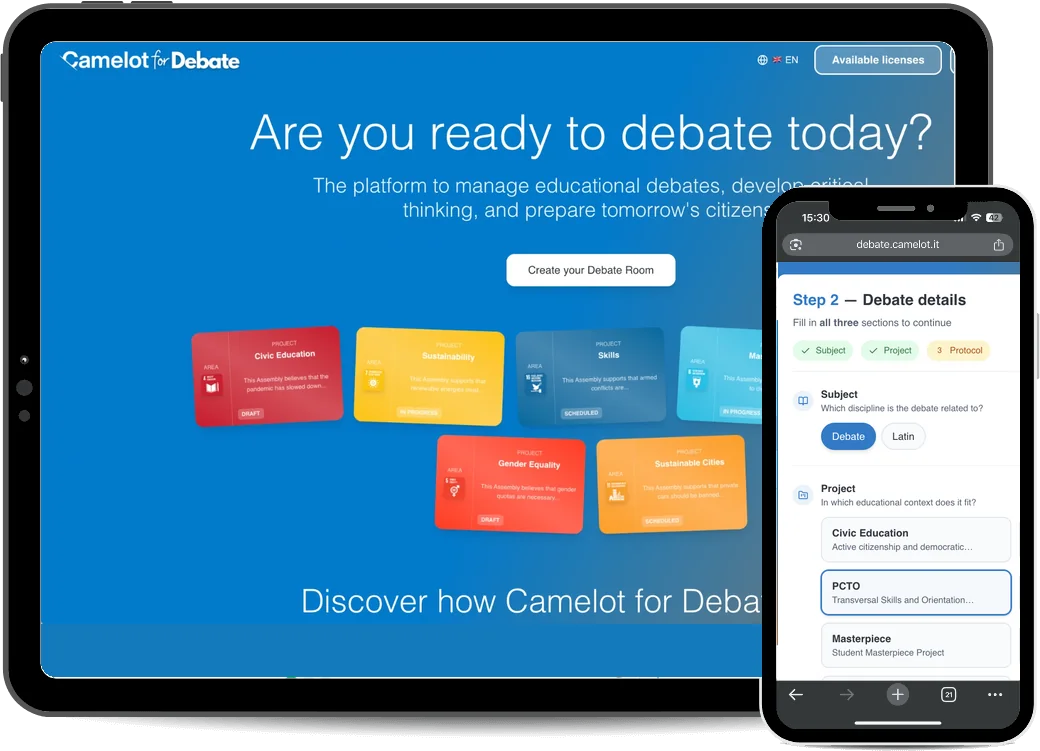
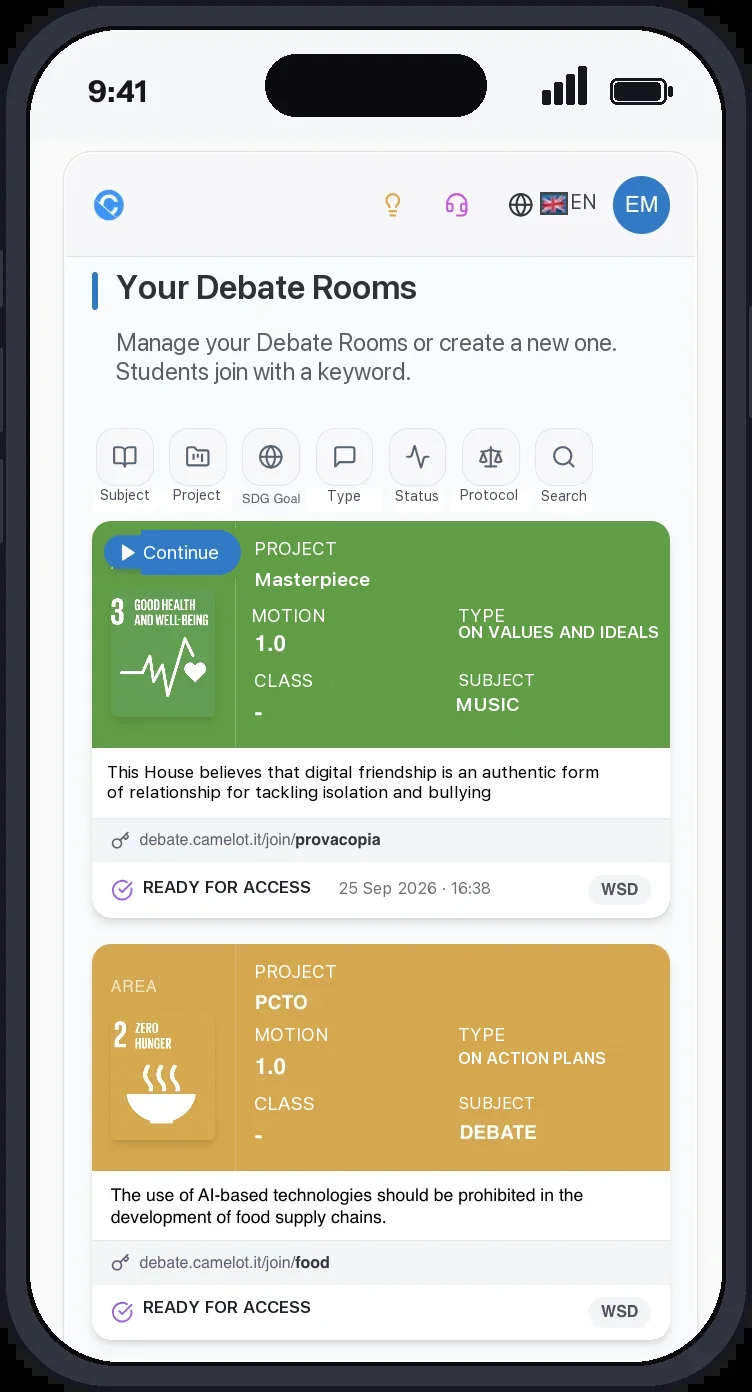
Debate in the classroom, with roles, timing and judges handled by the platform.
The teacher creates the Debate Room, students join with a keyword, and the report is ready when the debate ends.Camelot for Debate in action
The real screens of the platform. You see how the teacher creates a Debate Room and picks the motion, how students join with the room link and choose their role, how the debate runs with timers, points of information and protected time, how judges fill in their sheet and how the report is downloaded.
Five minutes, with the real screens of the platform, from creating the room to the report.
What is debate
Debate is a structured discussion in which two teams argue opposite sides of a motion, following set rules, roles and timing, in front of judges who score the speeches.
At school, debate builds critical thinking, research skills, listening, argumentation and citizenship skills. In a debate you do not necessarily defend what you think: you learn to understand a position, look for evidence and answer the other team's arguments.
To go deeper, read our guide to structured debate in schools and the article on how speeches work in World Schools Debate.
After every debate, a report that becomes the next lesson
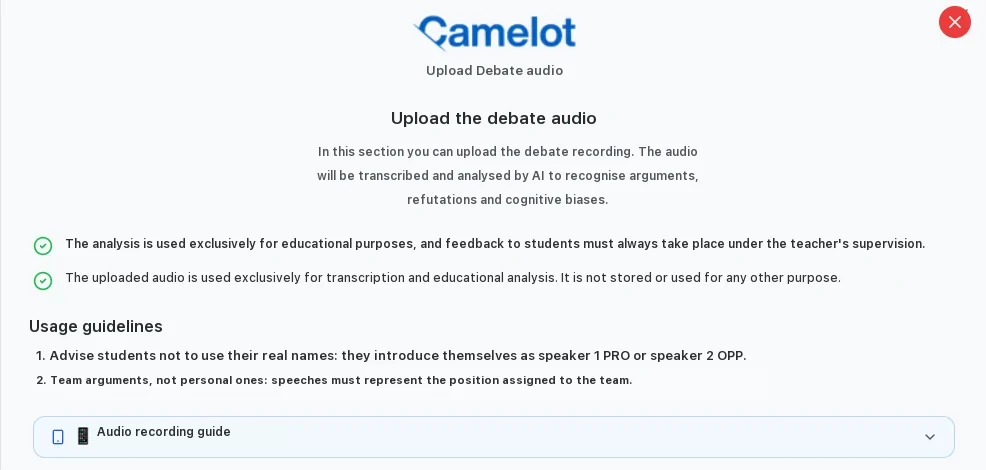
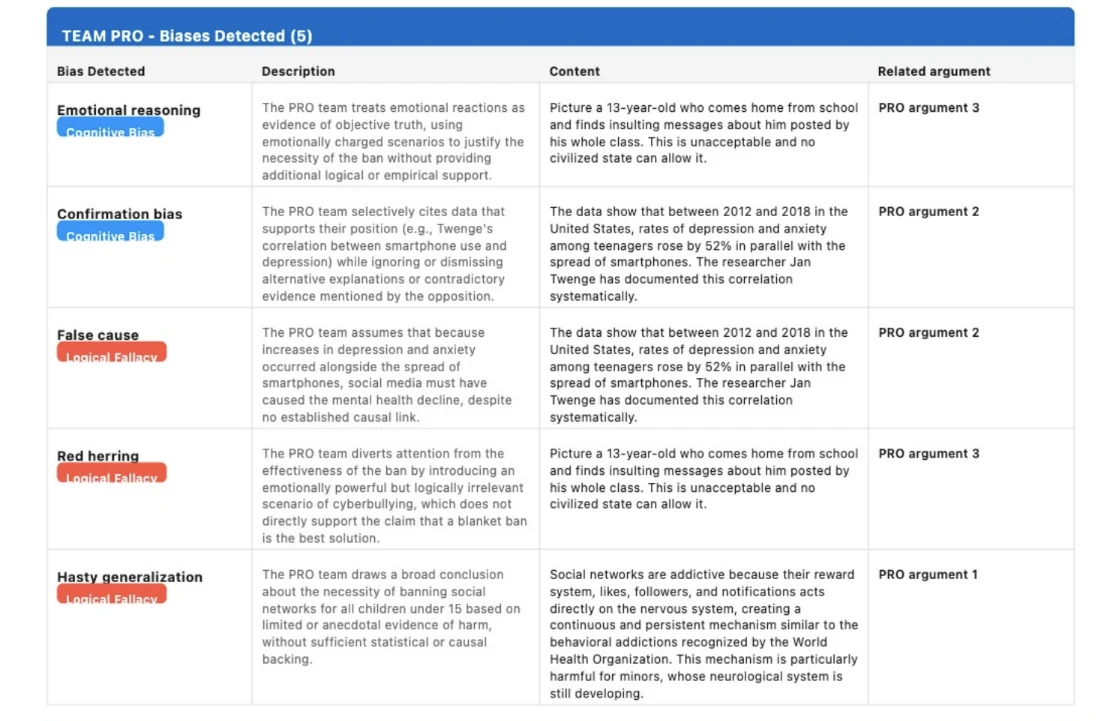
The newest part of debate with Camelot is the analysis with artificial intelligence. From the audio of the debate, the platform reconstructs the arguments of the two teams, the rebuttals and the cognitive biases, and returns them to the teacher in a report that helps develop argumentation skills and metacognitive strategies.
From the report to the next lesson
How Camelot for Debate works
Five steps, from creating the room to the report. The teacher has everything on one screen; students only see what their role needs.
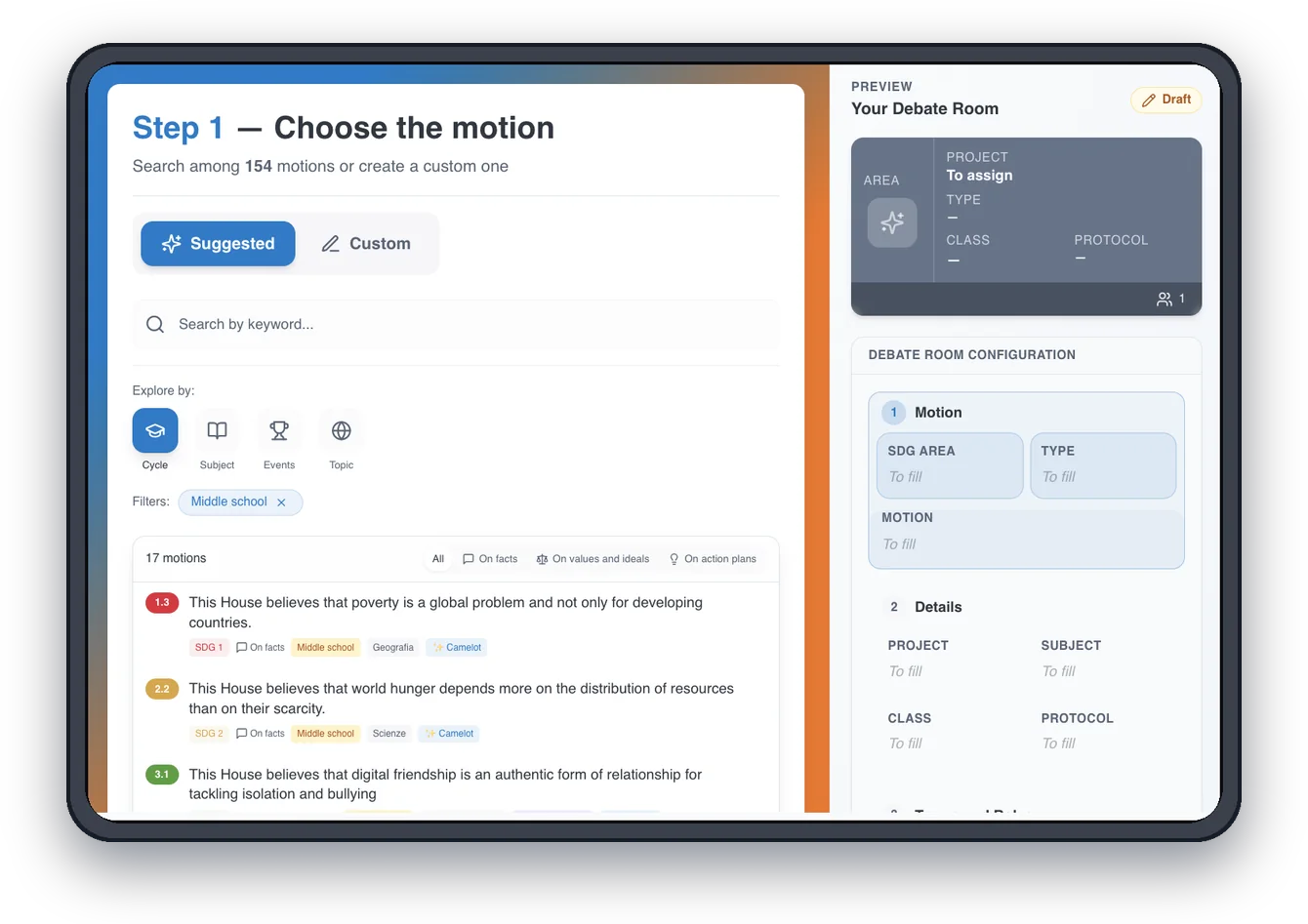
Create the Debate Room
Choose the project, subject, class, format and a motion from the validated list, or write your own. A preview of the room updates as you fill in the form.
Assign the roles
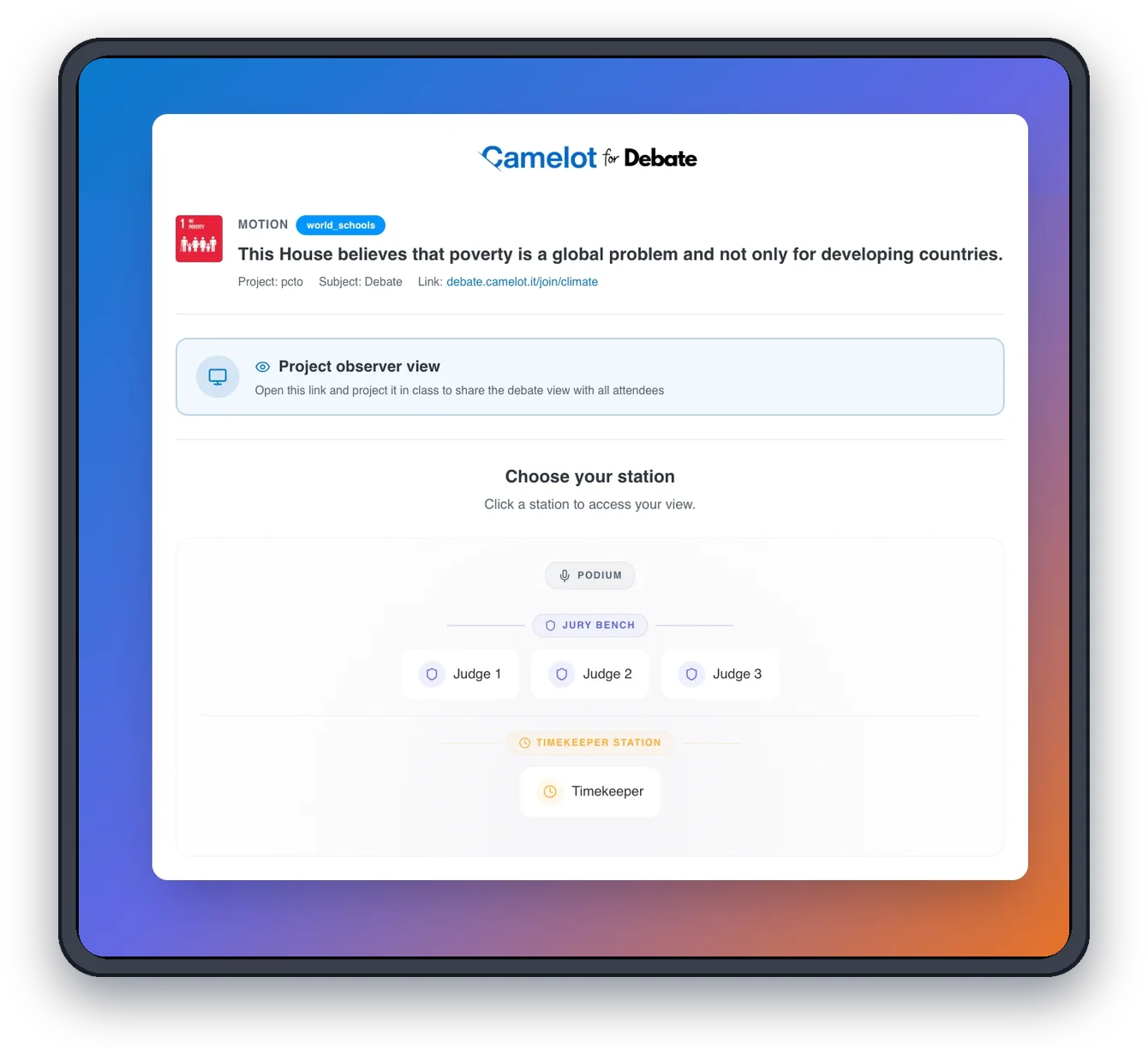
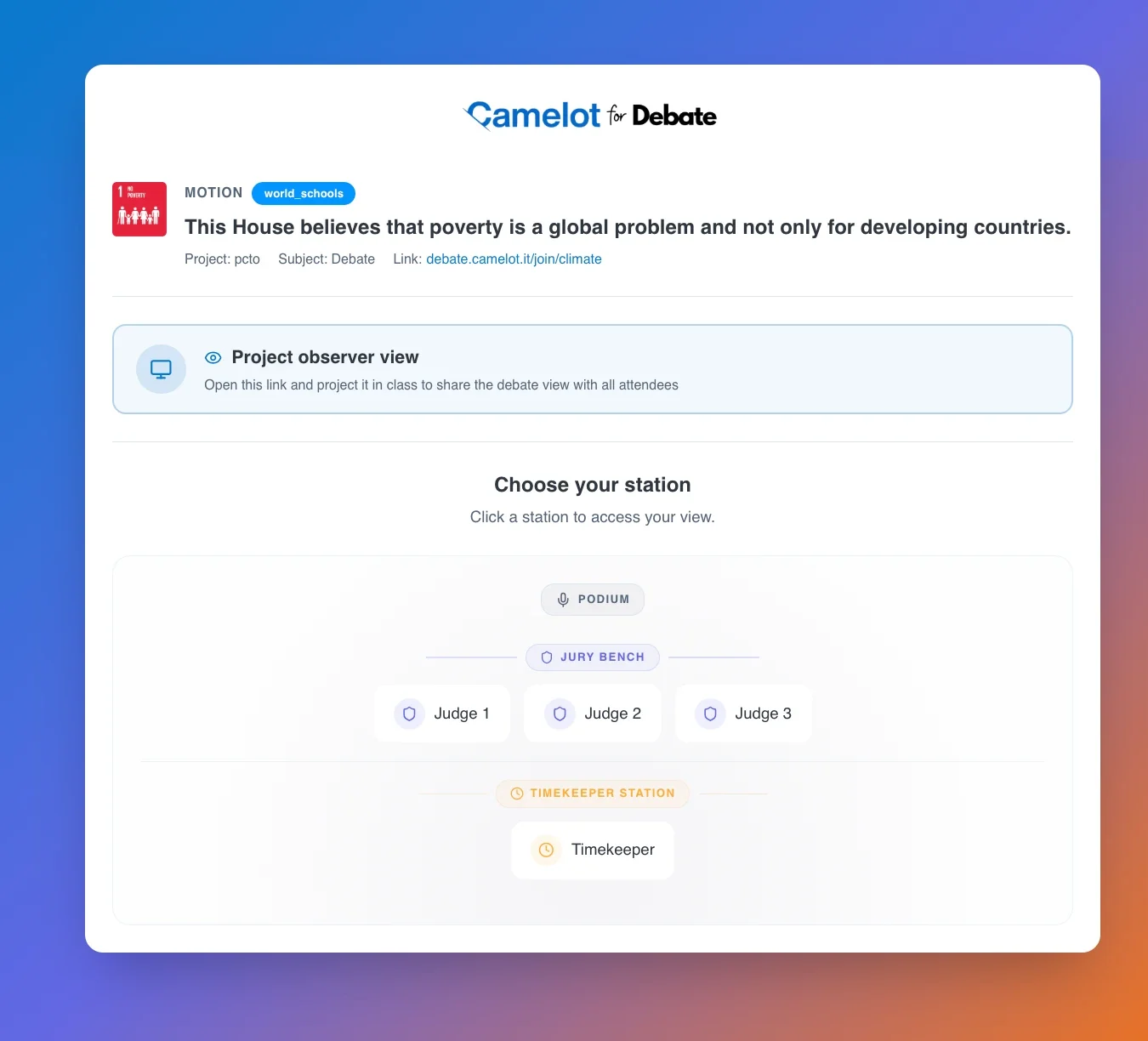
Students join with the room link and the keyword and pick their assigned role: speaker, judge, timekeeper, observer. No account, no email.
Run the debate
The platform follows the order of speeches, the timing, points of information and protected time. The observer view can be projected to the class.
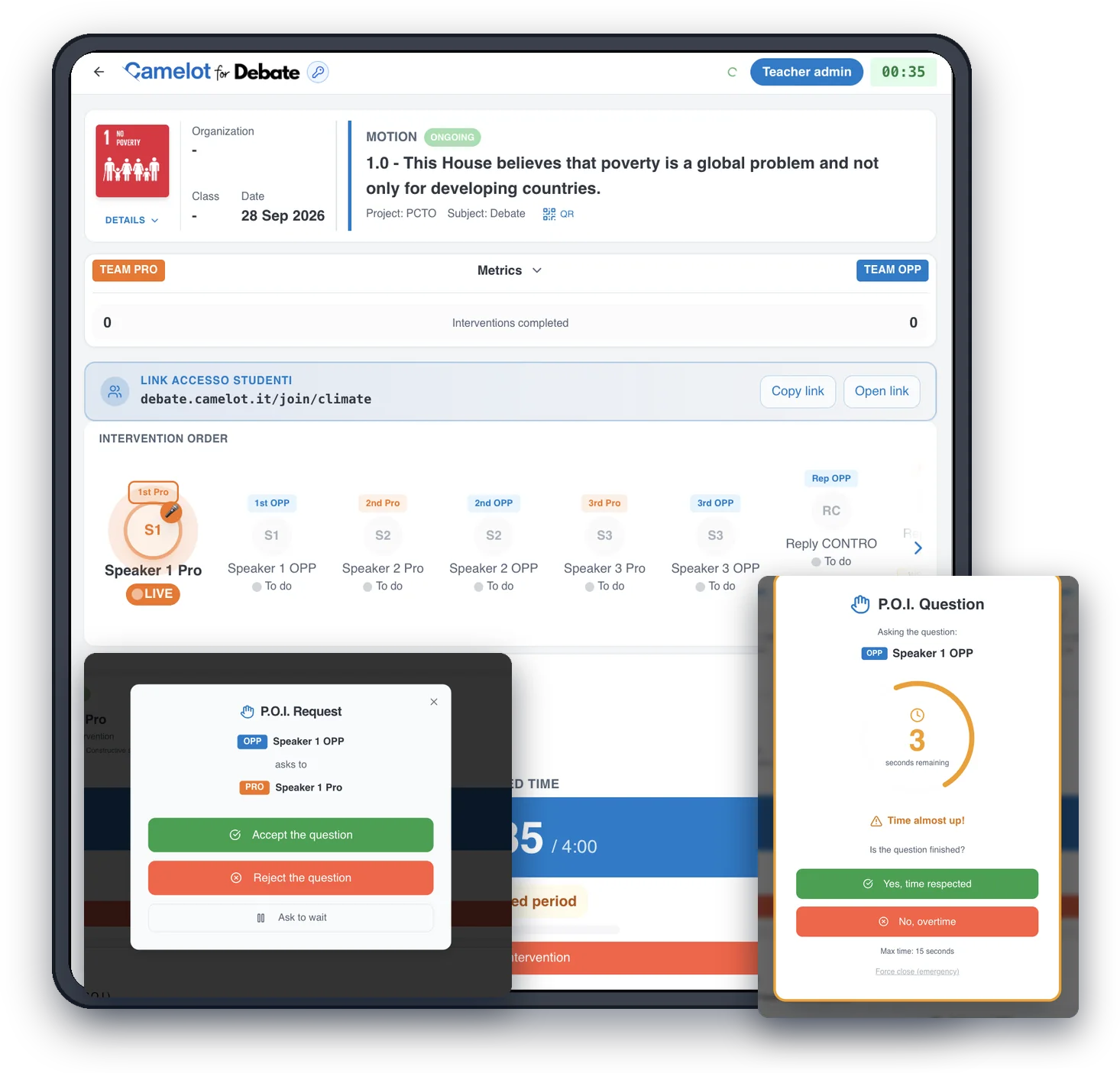
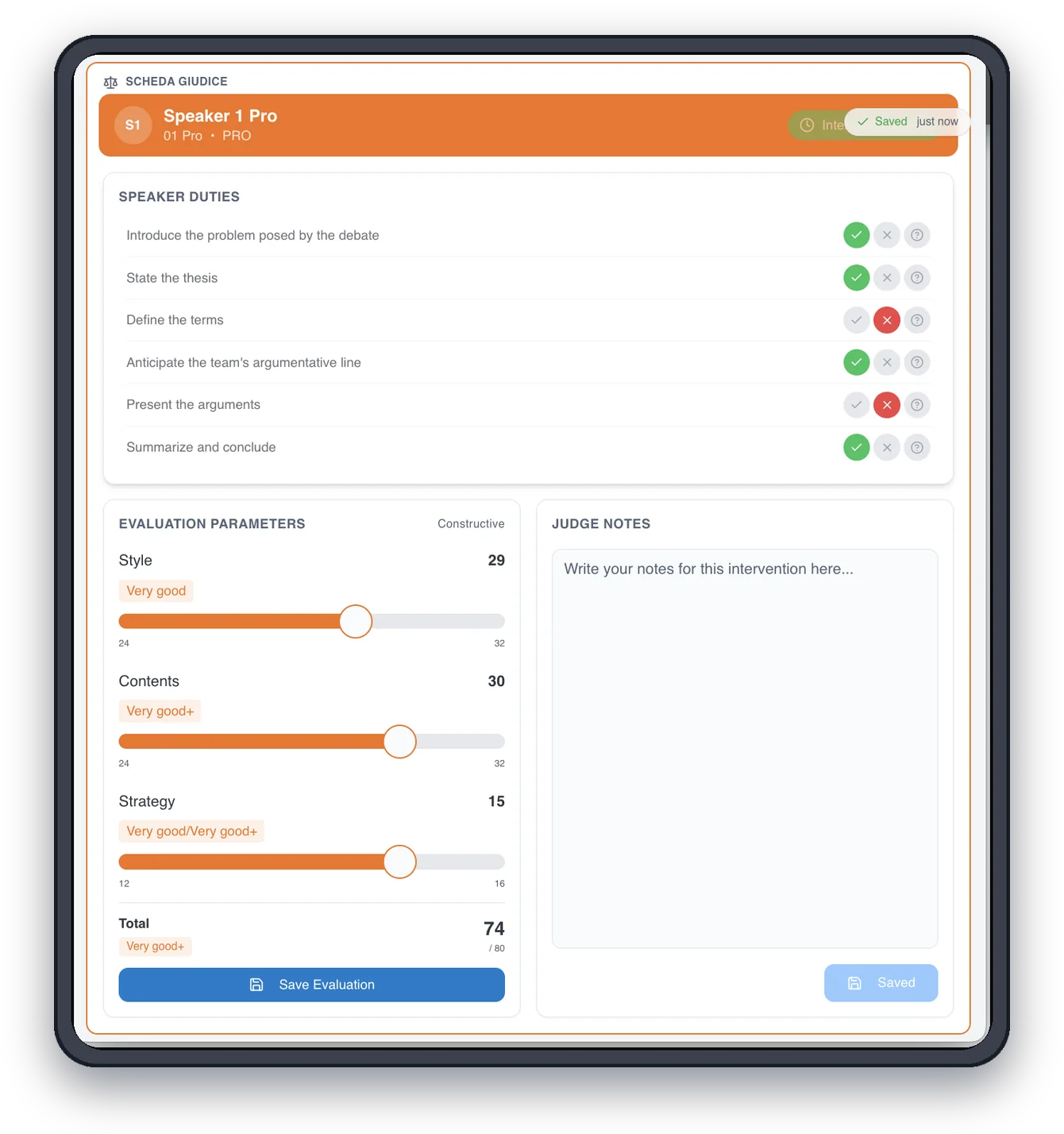
Judges score
Each judge has their own sheet with the format's criteria; scores are added up automatically and the winning team is declared.
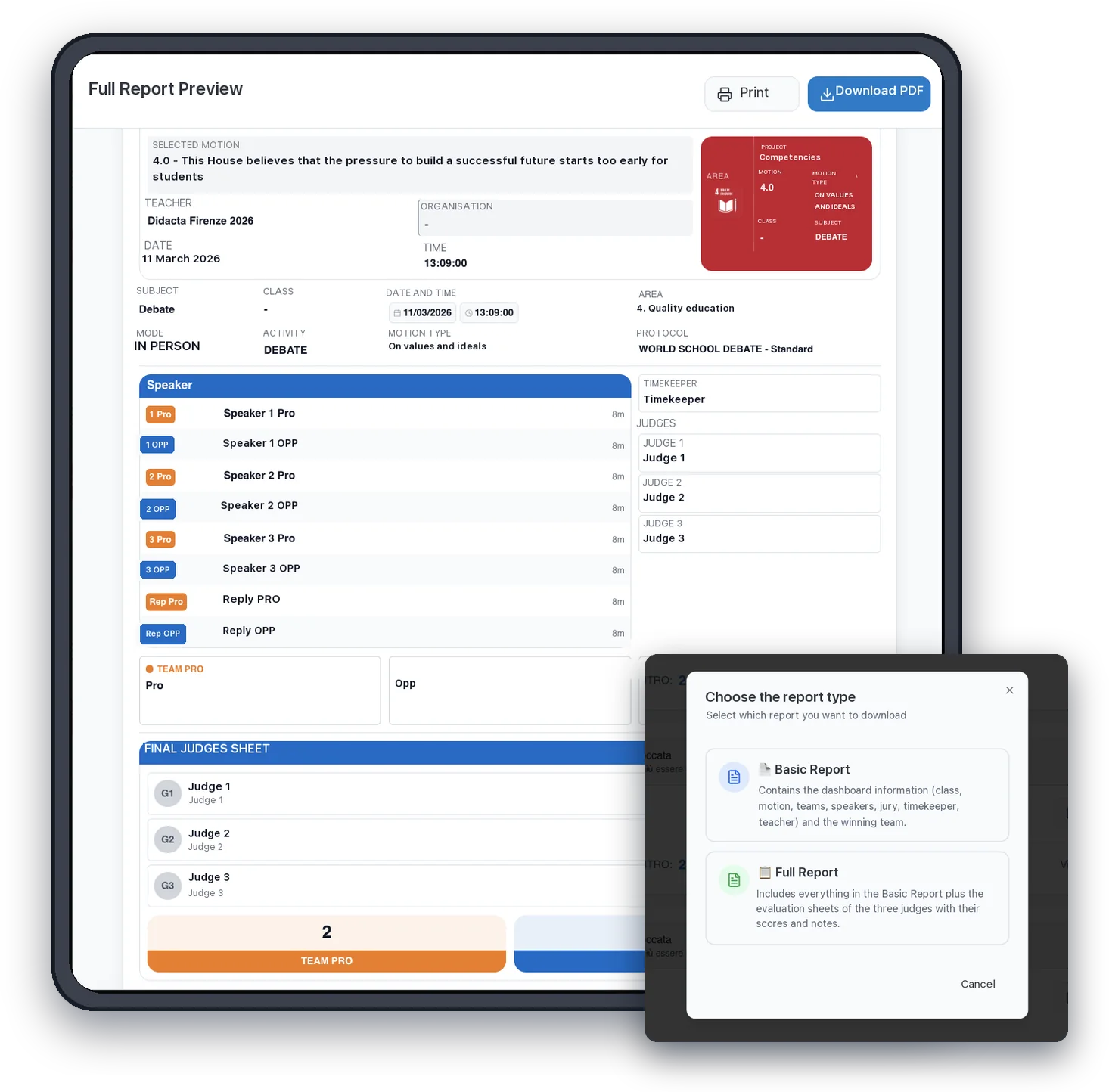
Report and analysis
When the debate ends, the PDF report documents the activity; upload the audio to get the AI analysis.
Students take part without accounts or email
The teacher is the only user with an account. Students join with the room link and the keyword, pick their role and appear only as Speaker 1 PRO or Judge 1. Who is behind each role is known only to the teacher, outside the platform.
L'full privacy notice (PDF) and the privacy contact, privacy@camelot.vote.
Debate analysis with artificial intelligence
From the audio of the debate, the platform reconstructs the arguments of the two teams, the rebuttals and the cognitive biases that emerged. The teacher gets a reading of the debate to bring back to class, without listening to everything again.
Formats and motions ready to use
The World Schools Debate format
Available in the standard version and in the short version. In the standard version, constructive speeches last 8 minutes and replies 4; in the short version 4 and 2 minutes, to fit in a single lesson.
The platform generates the role slots required by the format on its own, shows the order of speeches with each one's timing, and signals the time protected from points of information.
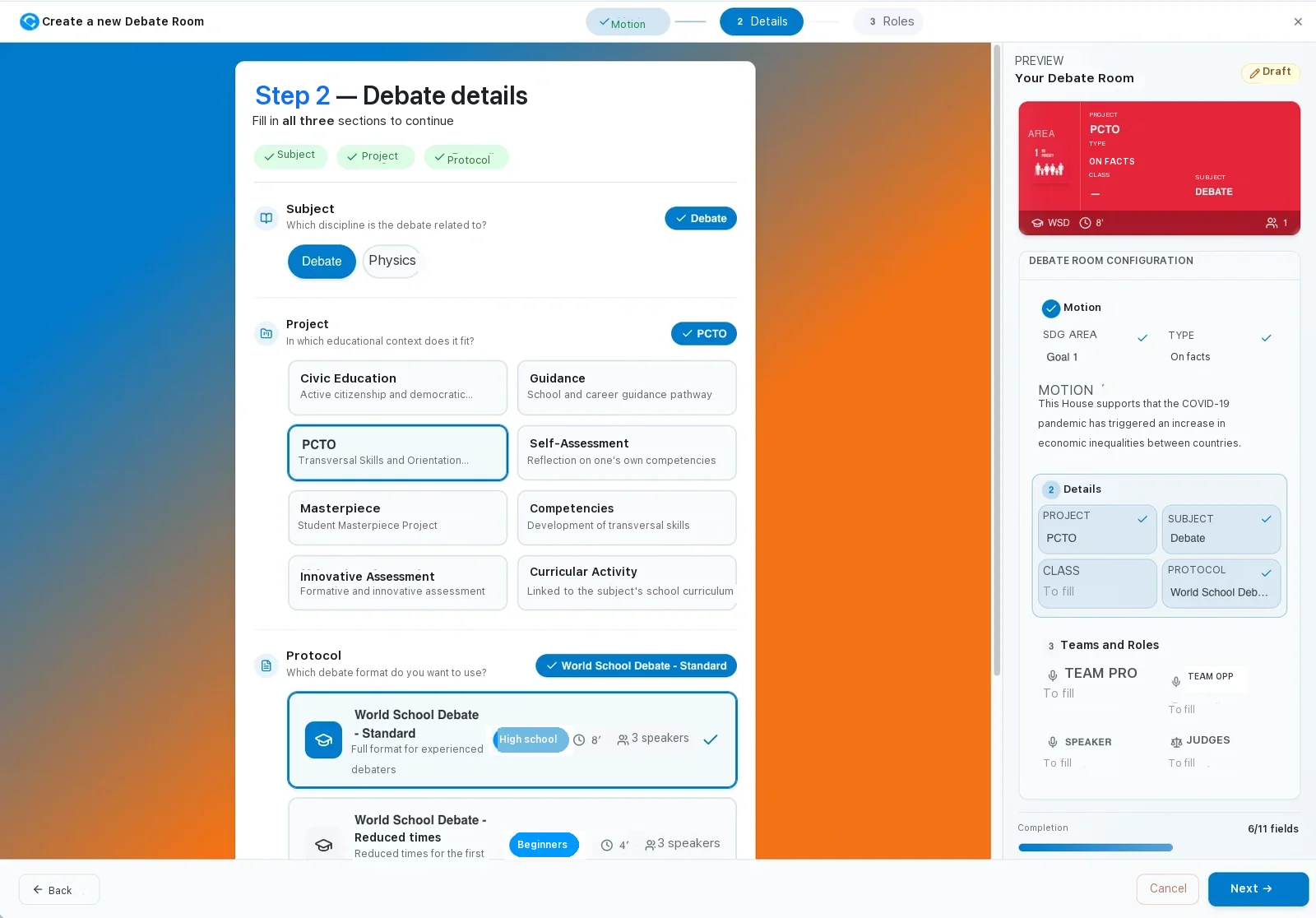
Over 150 validated motions
In Italian and English, organised by Sustainable Development Goal, type (facts, values, action plans), subject and school level. They can be filtered in seconds and are updated in line with ministerial guidelines.
The teacher can also write a custom motion and classify it by level, subject, topic and type, so it appears in the report like the others.
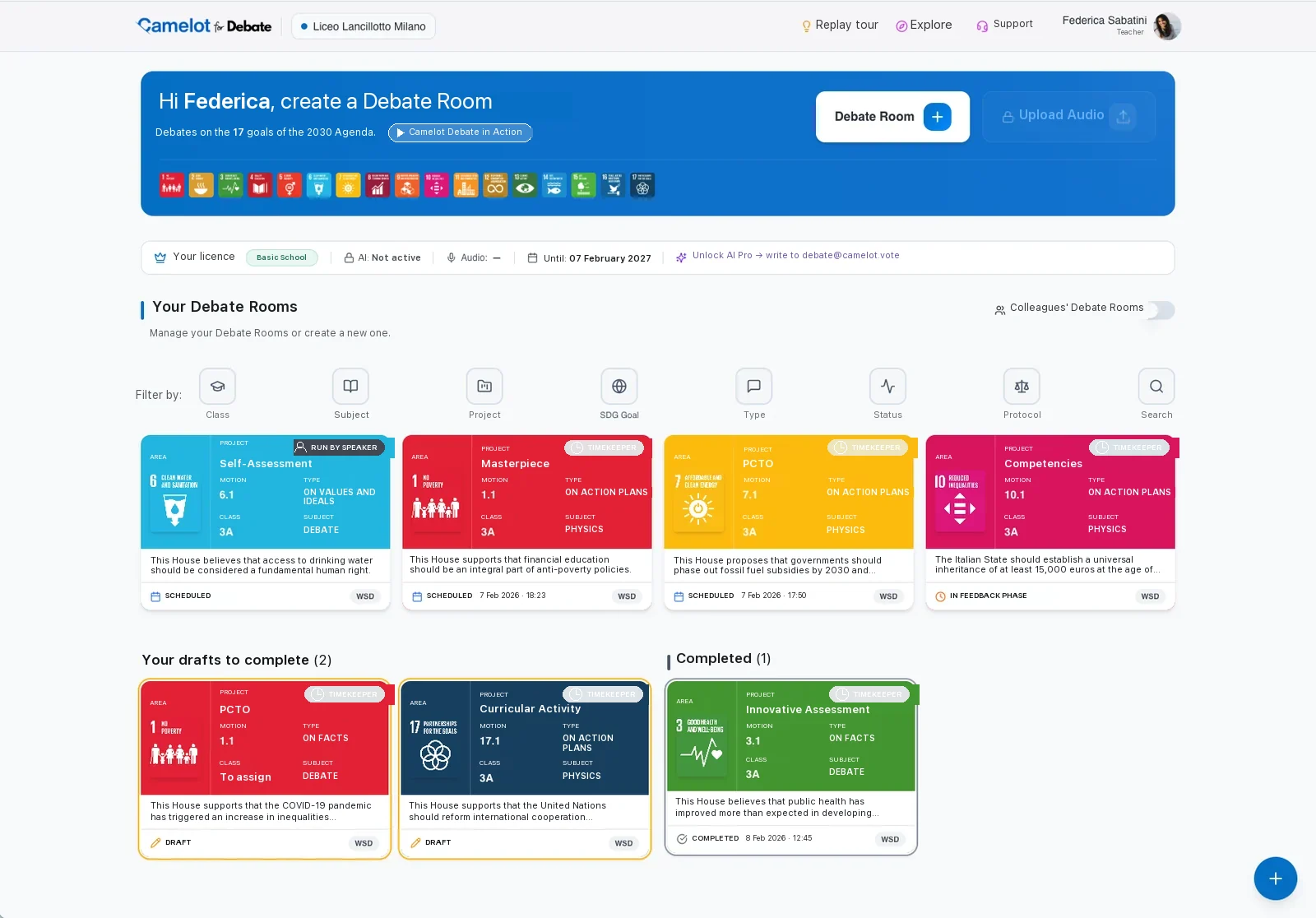
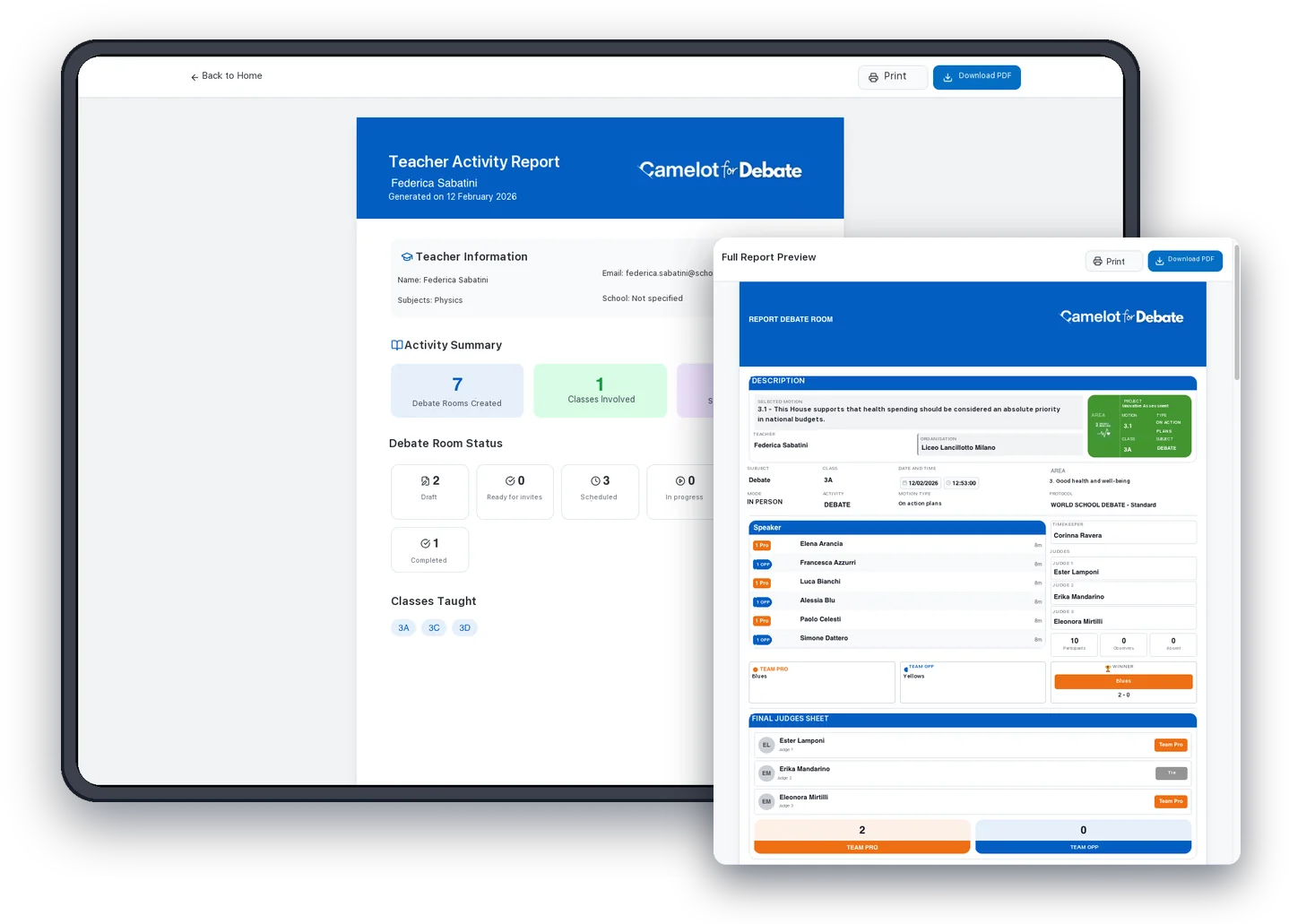
Reports to document the activity
When the debate ends, the platform generates a printable PDF. Two levels, chosen from the same page.
Free trial and licences for schools
You start with the Trial, free and with no commitment. Then three annual packages, depending on how many teachers will use the platform: you request them from the form at the bottom of the page. Prices including VAT, updated on 27 September 2026.
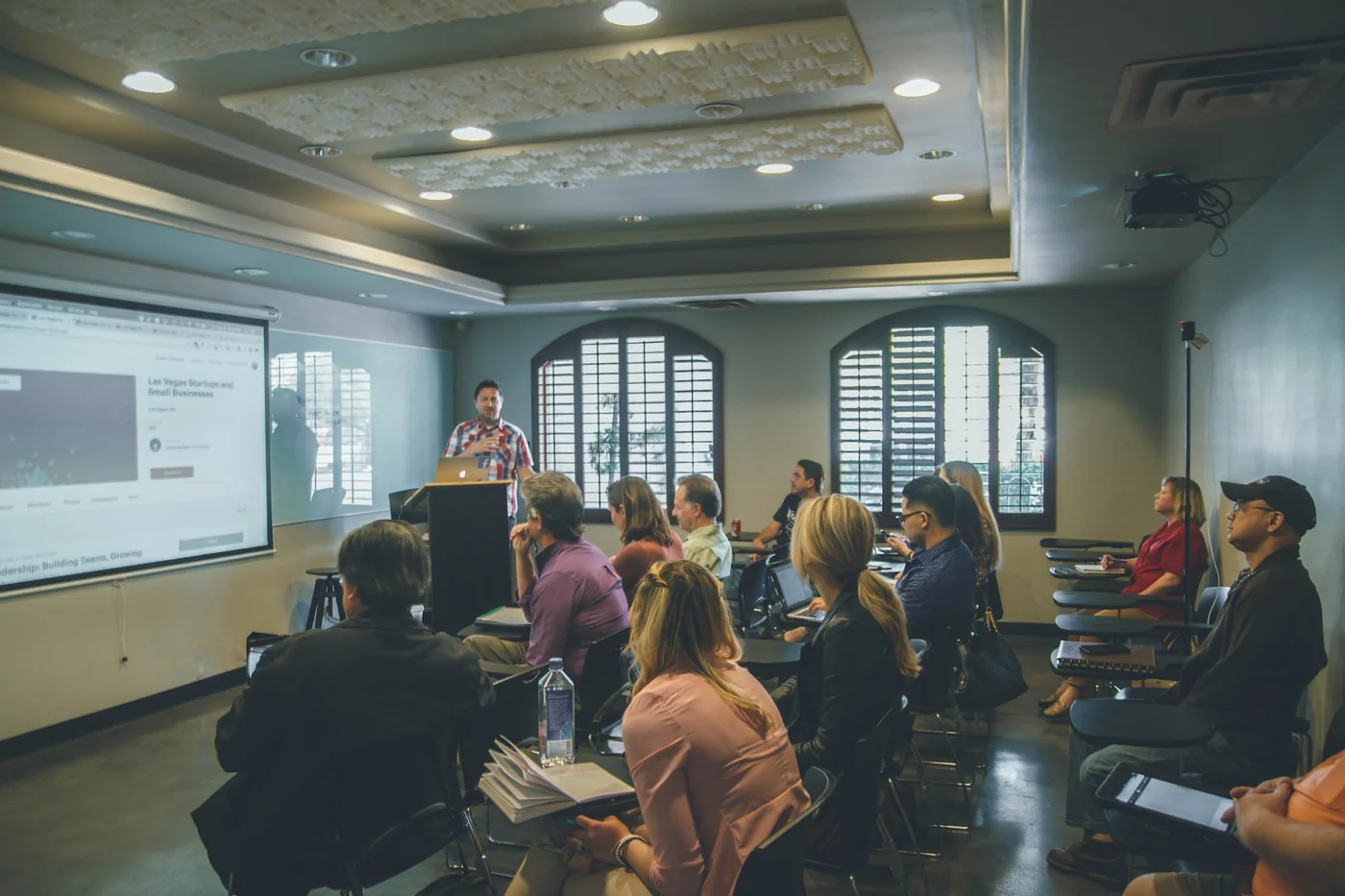
Who Camelot for Debate is for
Civic Debates, the debate that enters the City Council
Civic Debates are a programme promoted by a municipality with Camelot: secondary school students train in debate with professional coaches and hold public debates in front of citizens and institutions, on motions linked to the city's policies.
Every debate is analysed with the artificial intelligence of Camelot for Debate. In Turin, a digital vote and a Manifesto handed to the City are added.
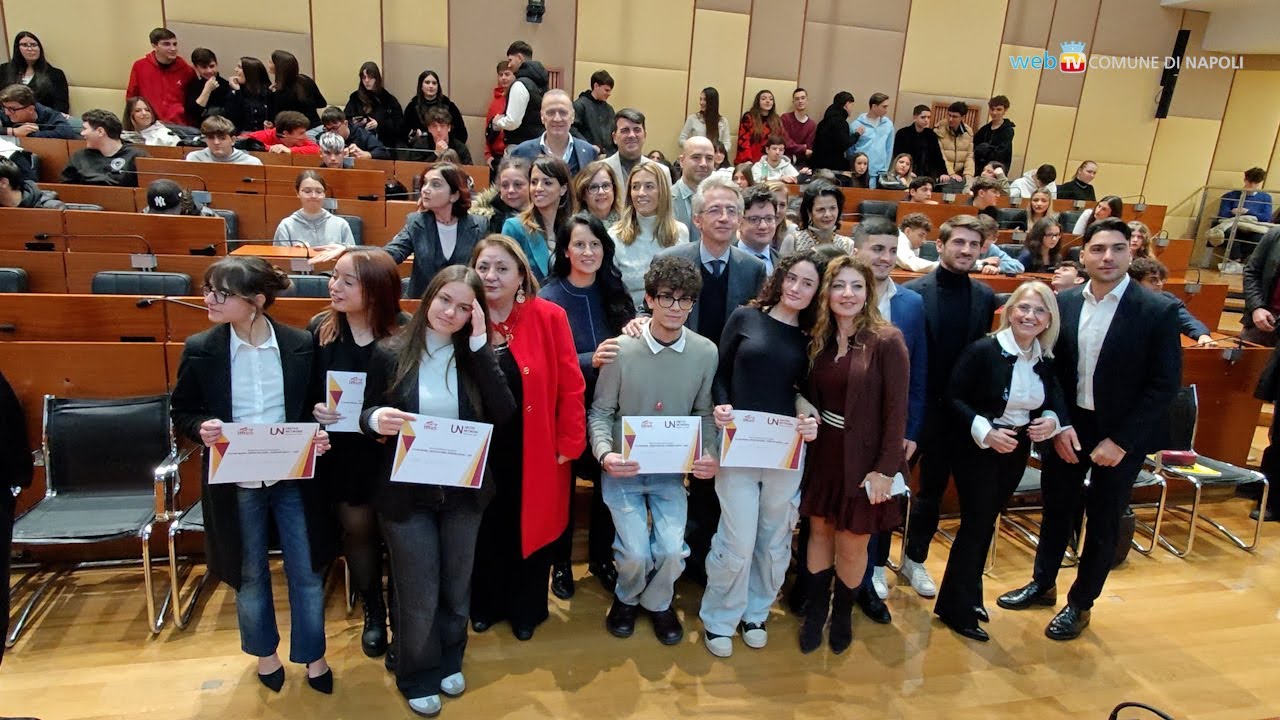
Who we work with and where we have been
Camelot for Debate works with Società Nazionale Debate Italia and takes part in Didacta with the WeDebate network, helping to spread debate in Italian schools.















Eight words to understand debate
Frequently asked questions about Camelot for Debate
- What is debate, a guide to structured debate in schools →
- Debate at school, what it is and why it works →
- World Schools Debate, what it is and how speeches work →
- Teenagers and AI, debate to train critical thinking in class →
- How to bring AI to school with Camelot for Debate, the Italian Ministry guidelines →
- Debate and the 2026 school-leaving exam, how to prepare →
Request what you need
One form for five requests: the white paper on debate, a demo of the platform, a phone call, a licence for the school, or a research or project proposal. We reply the same day on working days.Bring debate into your classroom
The Trial lasts 40 days and includes every feature: a Debate Room takes a few minutes to set up and the first debate can happen in your next lesson.
Try it free for 40 daysFor schools and custom projects: debate@camelot.vote